Research is the single biggest differentiator between IMGs who match into competitive specialties and IMGs who don’t. The data on this is overwhelming — NRMP Charting Outcomes, program director surveys, and every matched IMG’s CV tell the same story.
The problem: most IMGs attend medical schools without strong research infrastructure, without U.S. academic faculty nearby, and without obvious lab access. The assumption becomes “I can’t do research.” That’s wrong. Here’s how you actually do it.
The three research products that work for students
As a medical student — especially an IMG — you should prioritize projects that are:
- Completable within 3–9 months (not multi-year grant-funded studies)
- Student-leadable (you can first-author them)
- Publishable in peer-reviewed journals or presentable at national conferences
Three product types fit all three criteria:
Type 1 — Case reports and case series
- Time: 1–3 months from idea to submission.
- Required resources: A mentor with access to interesting cases (any attending at any hospital).
- Publication venues: Specialty-specific case report journals (Cureus, BMJ Case Reports, Journal of Surgical Case Reports, specialty-specific case report journals).
- Strategic value: Strong first-authorship, demonstrates clinical writing ability, publication is almost guaranteed if submitted strategically.
Type 2 — Systematic reviews and meta-analyses
- Time: 4–9 months.
- Required resources: Library access (your school has this via Ovid / PubMed / Embase), a mentor to co-author, one or two fellow students for double-screening.
- Publication venues: Specialty journals; PROSPERO registration in advance; impact factor 2–5 commonly achievable for a well-done review.
- Strategic value: Demonstrates rigorous methodology. One first-authored systematic review outweighs 5 generic posters.
Type 3 — Retrospective chart reviews
- Time: 6–12 months.
- Required resources: A research mentor at a U.S. institution with chart access + IRB infrastructure. You’ll usually be a first or second author.
- Publication venues: Specialty journals; higher impact depending on sample size and question.
- Strategic value: “Real” research that simulates what you’d do as a resident.
The cold outreach playbook
Most IMGs think they can’t get research because they don’t have the connections. Here’s the truth: U.S. academic PIs have far more projects than they have residents and students to finish them. A motivated, reliable medical student who can do literature reviews, data entry, manuscript drafting, and statistical runs is genuinely useful to them.
Cold outreach works. Here’s the exact method:
Step 1 — Identify your specialty’s top producers
Go to PubMed. Search your specialty + “systematic review” or specific topics you care about. Identify the names that appear repeatedly on recent publications — these are the active PIs.
Build a spreadsheet of 30–50 PIs at U.S. academic institutions. Include:
- Name, institution, email (available on the institution website)
- Recent relevant publications
- Their apparent specific interests
Step 2 — Write a specific, short cold email
Template:
Subject: Medical student interested in [specific topic]
Dear Dr. [Last Name],
I’m a third-year medical student at [school] with a strong interest in [specialty]. I read your recent paper on [specific paper title — not a generic “your work”], and I was particularly struck by [one specific, well-thought-out observation about the paper].
I’m writing to ask whether you have any ongoing research projects — case reports, chart reviews, or systematic reviews — where I could contribute as a first or second author. I have experience with [whatever you actually have: Covidence, EndNote, REDCap, statistical software, manuscript writing, etc.]. I’m comfortable working remotely and am committed to completing whatever I start on your schedule, not mine.
I’ve attached my CV. I’d be grateful for 10 minutes on a call to discuss if there’s a fit.
Best, [Your name] [Medical school + year]
What makes this email work:
- Specific paper reference (shows you read, not generic admiration)
- Specific ask (a project, not “mentorship”)
- Specific skills (so the PI knows what you can actually do)
- Short (respects the PI’s time)
- Explicit commitment to reliability
Step 3 — Send it in waves
- Send 5–10 emails. Wait 2 weeks.
- Follow up once on non-responses (one-paragraph bump, not a guilt trip).
- Send the next 5–10.
- Repeat until you have 2–3 active projects.
Response rate is typically 10–25%. That means you need to send 20–40 emails to get 2–3 solid connections. Most IMGs send 2 emails and give up. That’s the problem.
Step 4 — Over-deliver on the first project
When you get an opportunity, over-deliver. Turn things around fast. Communicate proactively. Ask specific questions rather than general ones. If you do one project well, the second and third come automatically — and they’ll be bigger, with better publication venues.
Remote research is real
Modern research is nearly all digital. A student in the Caribbean can meaningfully contribute to a U.S. academic project through:
- Literature screening (Covidence, Rayyan)
- Data extraction from charts or PDFs
- Manuscript drafting and revision
- Figure creation (Adobe Illustrator, BioRender)
- Statistical analysis (R, Stata, SPSS)
- Submissions and revisions
The most common remote arrangement: you handle literature review, data extraction, and first-draft manuscript. The PI and local residents handle IRB, chart access, and senior edits. You’re second or first author depending on contribution.
What about bench research?
Bench research (wet lab, molecular, translational) is nearly impossible to do remotely. Unless you’re physically at a lab for a summer or a research year, skip it. Clinical research is equally respected by residency programs and far more completeable for IMGs.
Conference strategy
Abstract submission and poster presentations at national conferences are high-yield:
- National conferences in your specialty — the acceptance rate for posters is typically 50–80%. Submit early and often.
- Regional conferences — often accept everything. Good for building a CV.
- Medical student research conferences — many schools and national organizations run these annually.
Each poster is a CV line. Each publication is a bigger CV line. A conference presentation at a national meeting (with travel funded or self-funded) also provides networking. Several IMGs I’ve worked with met their eventual mentor at a conference poster session.
Research year — when it’s worth it
A dedicated research year (taking a year off between MS3 and MS4, typically at a U.S. academic program) is a major commitment. It’s worth it if:
- You’re targeting an ultra-competitive specialty (Derm, Neurosurgery, Plastics, Ortho, Rad Onc, Urology, ENT, Ophtho)
- You have weak other application components (Step scores, clinical grades) that research would offset
- You can secure a funded or self-funded position at a program with a strong publication record
It’s usually not worth it if:
- You’re already strong in other areas and just need 2–3 more publications (use remote projects instead)
- You can’t commit to being physically present at the research institution
- Your target specialty has high IMG match rates without a research year
Timelines by year of training
- MS1: Start one literature review or case report. Attend your school’s research forum.
- MS2: Complete and submit 1–2 case reports. Start a systematic review.
- MS3: Complete the systematic review. Start a chart review project via a U.S. mentor. Attend a conference.
- MS4 (pre-application): Submit everything submittable. Target: 5–10 publications/abstracts on ERAS for competitive specialties, with clear specialty focus.
For competitive specialties, double the above.
The most common mistakes
- Generic outreach. “Dear Professor, I’d like to do research with you.” Dead on arrival.
- Starting too many projects, finishing none. Three half-finished projects are worth less than one completed paper. Start few, finish each.
- Generic topic spread. Research across 5 unrelated topics reads as unfocused. Cluster your work around 1–2 subspecialty interests within your target field.
- Not submitting abstracts to conferences. Many students write papers and never present them. Conferences are half the value.
- Submitting abstracts without follow-through. If you submit to a conference and get accepted, go (virtually or in-person). Missing your own presentation reads badly.
The bottom line
Research is the clearest example of “the IMG tax” — you need more of it than U.S. MDs, and you have to build it yourself. The good news: every step is learnable and controllable. Cold emails work. Case reports work. Systematic reviews work. Remote research is real.
The applicants who match into competitive specialties from Caribbean schools are not luckier than their classmates. They sent more cold emails, finished more projects, and made research a daily habit from MS1. That is the game. Play it early and it compounds.
Ready to stop guessing and start matching?
Book a free 30-minute strategy call with Tyler and the Ranked to Match team — no pitch, no obligation.
Book a Free Consultation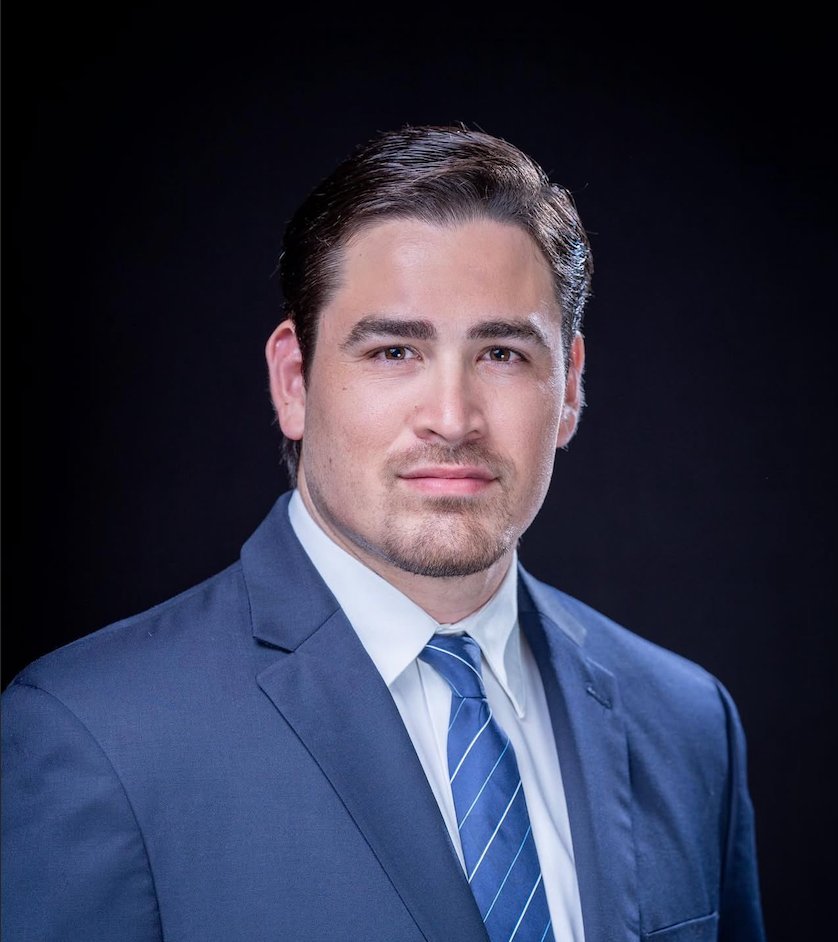
Tyler Warner
Tyler matched into neurosurgery from a Caribbean medical school and founded Ranked to Match to help other IMGs and DOs match into competitive residencies. Every post is written from direct experience.