Every IMG has heard the phrase “apply to IMG-friendly programs.” Very few have been told how to actually identify them. This post is the method I use — and the one we teach every client.
What “IMG-friendly” actually means
The phrase gets thrown around loosely. Let’s be precise. An IMG-friendly program is one that:
- Matches IMGs at a meaningful rate — not just 1 IMG in a class of 30, but consistently 20–40%+ IMGs in recent classes.
- Interviews IMGs at rates proportional to applications — meaning they don’t filter out IMG applications at the screen.
- Sponsors J-1 and/or H-1B visas — relevant only if you need one, but important.
- Evaluates applications holistically — does not gate-keep on “U.S. clinical experience” or “U.S. MD only.”
- Has faculty and senior residents who were IMGs themselves — a meaningful signal that culture is receptive.
Any program that meets all five is worth building a real application package for. Programs that meet 0–1 of these are lost causes — don’t waste the application fee.
The 6-source method
Here’s the exact method. Run through all six sources for every program on your long list. You’ll end with a tiered short list you can rank-order confidently.
Source 1 — The program’s current resident roster
Nearly every residency program website lists current residents with their medical schools. This is the single most informative data point you have.
Count:
- How many IMGs are in the current PGY-1 class?
- How many IMGs are across PGY-1 through chief?
- How many are Caribbean specifically?
- How many share your medical school specifically?
A program with 30% IMGs in PGY-1 is meaningfully different from one with 10%. A program with 0 IMGs across all PGY years almost never suddenly matches IMGs in your cycle.
Source 2 — FREIDA
The AMA’s FREIDA database publishes:
- Number of positions
- Visa status (J-1, H-1B, or neither)
- Percent IMGs at the program
The “percent IMGs” field is self-reported and lags by 1–2 years, but it’s still useful as a cross-check against the roster scan.
Source 3 — Residency Explorer
The AAMC’s Residency Explorer tool shows, for each program:
- Applicant characteristics (mean Step 2 CK, median number of applications, percent IMGs of interviewees)
- Historical match rates by applicant type
The percent IMG interviewees field is the most useful. A program that interviews 25%+ IMGs is materially different from one that interviews <5%.
Source 4 — NRMP Program Directors Survey
The NRMP releases a “Results of the Program Directors Survey” every two years. It doesn’t name programs, but it gives you specialty-level benchmarks for:
- Whether PDs rank U.S. MDs, DOs, U.S. IMGs, and non-U.S. IMGs similarly
- Percent of IMG applications that get interviewed
- Factors used in screening (Step scores, medical school, research, letters)
Use this for specialty-level calibration.
Source 5 — Doximity reviews by current and former residents
Doximity reviews (and specialty-specific Reddit threads, Facebook groups, and WhatsApp groups) provide the qualitative side:
- Is the program welcoming to IMGs culturally?
- Do IMGs get equal access to elective cases, conferences, fellowships?
- Are IMG residents promoted to chief roles?
These sources are noisy — read 20+ comments, not 2 — but the pattern usually becomes clear.
Source 6 — The IMG spreadsheets
Every application cycle, IMG communities circulate spreadsheets of programs by specialty with notes on IMG-friendliness, visa policy, and recent interview/match data. These are gold. The best ones are:
- Specialty-specific Google Sheets hosted by previous applicants
- Spreadsheets posted in IMG Facebook groups or Discord servers
- Lists from organized IMG organizations (depending on specialty)
Cross-reference what you find in the spreadsheets against the roster scan. If a program is on the “IMG-friendly” list but has zero IMGs in its current class, the spreadsheet is outdated.
Building your final list
For each specialty, do this math:
- 70% IMG-friendly programs — the ones where all 6 sources point positive.
- 20% stretch programs — strong programs where you have a specific connection (away rotation, research collaboration, specific alumnus connection). Signals belong here.
- 10% long-shots — programs where the math is against you but the opportunity is worth an application fee.
For most competitive specialties, this means 40–80 programs. For ultra-competitive specialties (Derm, Ortho, Plastics, Neurosurgery, ENT), expand to 80–120.
Visa realities
J-1 and H-1B are the two visa pathways for most non-U.S. IMGs:
- J-1 (ECFMG-sponsored) is the default. Most programs sponsor J-1. Obligation: return to home country or obtain waiver after training.
- H-1B is more restrictive — requires Step 3 passed before application and fewer programs sponsor. But it avoids the J-1 return requirement and is preferred for those planning long-term U.S. practice.
FREIDA and program websites state visa policy. If you need H-1B, filter aggressively — some specialties have relatively few sponsors.
What about red flags in specific programs
Signals to treat cautiously:
- A program whose IMG match rate has trended sharply down in the last 2–3 years. Sometimes leadership changes. Don’t apply based on old data.
- A program with strong brand recognition but zero IMGs in current classes. The brand may be drawing strong U.S. MD applicants, and there’s no room at the IMG margin.
- A program whose visa policy recently changed from “sponsors” to “does not sponsor.” This usually sticks.
- A program that says “US-trained preferred” on its applicant guidance. They mean it.
Signals to treat positively:
- A new chair or PD who was themselves an IMG or has a documented record of IMG training.
- A program actively expanding positions (more positions = more flexibility).
- A program in a geographic region where IMGs are historically concentrated — mid-Atlantic, Midwest, certain Southeast programs, New York area, New Jersey.
The one-line test
If I had to compress all of this into a single sentence: look at the current PGY-1 roster. If there are three or more IMGs on it, the program is real. If there are none, it’s a long shot regardless of what anyone tells you.
Common mistakes
- Applying only to “top” IMG programs. Everyone applies there. You need the less-obvious IMG-friendly programs that fly under the radar.
- Skipping visa filters. Wasted application fees, wasted signals.
- Taking Reddit threads as gospel. Single-applicant opinions are noisy. Read 20+ data points before forming a view.
- Using a 2021 IMG spreadsheet in 2026. Programs change. Data ages.
- Ignoring small programs. Some of the best IMG-friendly programs are community-based or mid-tier academic. Don’t skip them because of prestige.
Putting it together
Build a spreadsheet. Columns: Program, Specialty, # IMGs current class, # IMGs total, Visa (J/H/None), % IMG interviewees (Residency Explorer), Connections (research, alumni, away), Red flags, Tier (Reach/Target/Safety), Signaling priority.
Fill it out for every program on your long list. Sort by tier. Apply with strategy, not spray-and-pray.
An IMG who applies to 80 carefully chosen programs typically interviews better than one who applies to 150 random programs. The fee savings are real. The interview yield is real. The match rate is real.
Build the list like the scientist you were trained to be. The match rewards it.
Ready to stop guessing and start matching?
Book a free 30-minute strategy call with Tyler and the Ranked to Match team — no pitch, no obligation.
Book a Free Consultation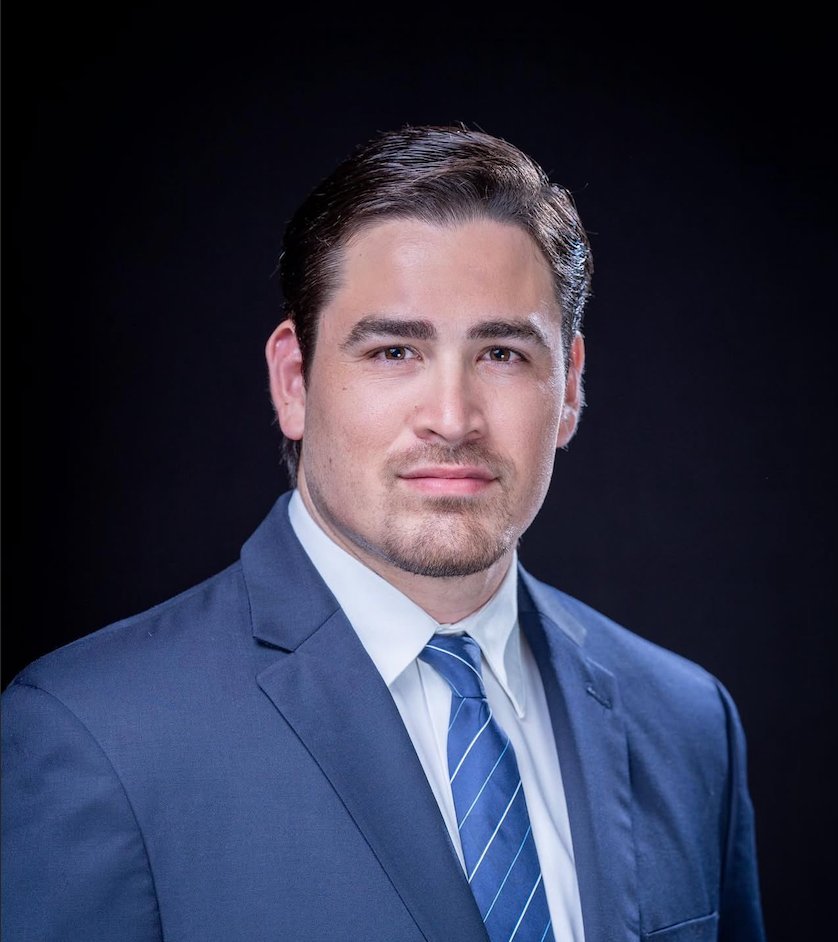
Tyler Warner
Tyler matched into neurosurgery from a Caribbean medical school and founded Ranked to Match to help other IMGs and DOs match into competitive residencies. Every post is written from direct experience.