The residency match is won long before you submit your ERAS application. By the time you hit “certify” in early September, the result is largely determined — by the rotations you chose, the mentors you earned, the research you finished, and the story you can tell about yourself. This guide walks you through that full arc — step by step — from preclinical year planning to submitting your rank list in February.
I wrote this from direct experience. I matched into neurosurgery as a Caribbean medical graduate — one of the most competitive specialties in the country, from one of the hardest starting positions. Everything below is what I actually did, what worked, and what I’d tell a younger version of myself.
Step 1 — Commit to a specialty early (but not too early)
The strongest applicants in competitive fields almost always declared their specialty by the end of MS2. That’s not because they “knew” from day one — it’s because an early commitment compounds. Every research project, elective, and letter stacks toward the same target.
If you’re still undecided, use preclinical summer and MS3 core rotations to narrow. But the moment your list is down to one or two, commit. An applicant who spent 18 months building a neurosurgery application beats a stronger generic student who’s still deciding in August of MS4.
Step 2 — Crush Step 1 (and Step 2 CK is non-negotiable)
Step 1 is pass/fail but program directors are not fooled. A “pass” with a borderline score appears on transcripts through the NBME, and program-specific screens still use predicted performance. Your real leverage point is now Step 2 CK, which program directors use to sort applications, gate interview invitations, and stratify rank lists.
Target ranges by specialty (approximate 2026 mean matched scores):
- Ultra-competitive (Derm, Plastics, ENT, Neurosurgery, Ortho, Rad Onc): 255+
- Highly competitive (Ophtho, Urology, Diagnostic Rads, Anesthesia): 245+
- Competitive (EM, Gen Surg, OB/GYN): 240+
- Mid-tier (IM, Peds, Neuro, PM&R): 235+
- Less competitive (FM, Psych, Path): 225+
For IMGs, add 10 points to every tier. That’s not editorializing — that’s what the NRMP Charting Outcomes data shows year after year.
Step 3 — Do research. Actually finish it.
Program directors count published and presented work. Abstract submissions that sit in a PI’s email folder don’t count. Aim for:
- 2–4 peer-reviewed publications in your target specialty (case reports, systematic reviews, and retrospective chart reviews are all completeable as a student)
- 3–6 conference abstracts (submit to national and regional meetings — acceptance rates are high)
- 1 ongoing or completed project you can speak to with depth on interview day
If you’re an IMG applying to a competitive field, double these numbers. Research is where you close the gap with U.S. MD applicants.
Step 4 — Engineer your letters of recommendation
A strong LOR is specific, from someone who knows you well, and in the right specialty. The quality differential between a generic “good student” letter and a specialty-specific “one of the best I’ve worked with this year” letter is enormous — this is one of the top three discriminators on an application.
- 4 letters is standard. 3 in-specialty + 1 chair letter is the common optimal mix.
- Ask at the end of a rotation where you’ve been visibly engaged — not by email, in person.
- Give letter-writers a packet: CV, transcript, personal statement draft, and 3–5 bullet points of specific moments you want referenced.
- Waive your right to view them. Non-waived letters are discounted.
Step 5 — Do the right away rotations
Away (audition) rotations are the single highest-leverage thing a competitive applicant does. A standout away can turn a reach program into a realistic match. A bad away can actively hurt you.
- 2–3 aways for most competitive specialties. 4 for neurosurgery and a handful of others.
- Pick programs where you’d genuinely want to train, not just the biggest names.
- Use VSLO early — slots for top programs fill within days of opening.
- Aim for aways in May–July, leaving August to finalize letters and ERAS.
- Every attending you work with 1:1 is a potential letter-writer. Every resident is a potential advocate in a ranking meeting.
Step 6 — Write a personal statement that differentiates you
Your personal statement should answer three questions without stating them: (1) Why this specialty? (2) Why are you a strong fit? (3) Why should we interview you?
The best personal statements are specific, personal, and short. 650–750 words. One anecdote that anchors everything. No “I’ve always wanted to be a doctor” opening. No listing your CV. Show, don’t tell.
Write it, set it down for a week, then edit ruthlessly. Read it aloud — if you stumble, rewrite that sentence. Get two to three readers, at least one of whom has sat on a selection committee in your specialty.
Step 7 — Build your program list strategically
For 2026, the math looks like this:
- Ultra-competitive: 60–100 programs. Apply broadly with signals concentrated on reach.
- Highly competitive: 40–70 programs.
- Competitive: 30–50 programs.
- Mid-tier and less competitive: 20–40 programs.
- IMGs: add 20–40% to any tier. Focus on IMG-friendly programs with a track record of interviewing non-U.S. graduates.
Use Residency Explorer for filters. Cross-reference with Doximity rankings, NRMP Program Directors’ Survey, and specialty-specific IMG data. Build your list in three tiers — reaches, targets, safeties — and interview anywhere you’d genuinely be happy.
Step 8 — Master the signal
Program signals (introduced in 2022 and now universal) are the highest-leverage new variable in the match. Programs are three to six times more likely to interview a signaled applicant than an unsignaled one, controlling for credentials.
- Signal programs where you have a real connection (away rotation, research collaboration, alumni network, mission fit).
- Do not waste a gold signal on a dream program where you have no connection. Use it on a strong-target program where the signal moves you from “maybe” to “yes.”
- Geographic ties matter more than prestige. Programs are rational — they rank applicants who will come.
Step 9 — Prepare for interviews like it’s the exam
Most applicants underprepare for interviews. You can do three mock interviews and be in the top 20% of preparation in your applicant pool.
- Have a 30-second, 2-minute, and 5-minute version of your story ready.
- Prepare 5–7 anchor stories that you can redeploy across “tell me about a time…” questions.
- Research each program for 45 minutes the night before — alumni, recent publications, curriculum changes, leadership.
- Prepare 3 questions per interviewer — read their faculty bio, find something specific.
- Write a thank-you within 24 hours — short, specific, error-free.
Step 10 — Build the rank list
Rank where you’d be happy. Rank the programs you would go to over the next in line, in that order. The algorithm does the rest.
Do not try to “game” it. Do not drop a program you liked because “they won’t rank me.” The only way a strategy backfires is if you rank a worse program above a better one because you thought you had a better shot. Rank by preference, period.
Step 11 — If you don’t match, SOAP with a plan
The SOAP window is 72 hours of chaos. Have a strategy ready:
- A SOAP-specific CV (tight, one page)
- A SOAP-specific personal statement (3 paragraphs, punchy)
- A target list of IMG-friendly, unfilled programs in any specialty you’d take
- A mentor or consultant on standby to edit your application in real time
Most unmatched applicants with a competent SOAP strategy match in round 1.
A final word
The residency match rewards preparation, not luck. Start early. Stack wins. Get specific mentorship from people who’ve been exactly where you want to go. The applicants who match into the hardest spots aren’t the smartest — they’re the most prepared.
If you’d like help building your own step-by-step plan, that’s exactly what we do.
Ready to stop guessing and start matching?
Book a free 30-minute strategy call with Tyler and the Ranked to Match team — no pitch, no obligation.
Book a Free Consultation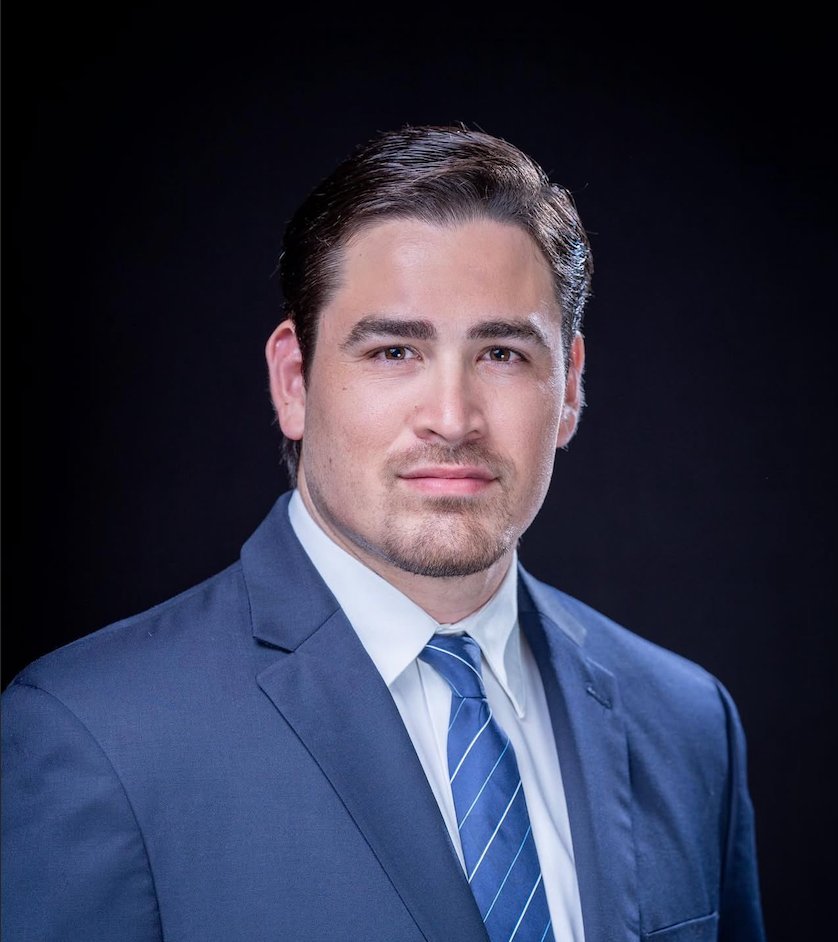
Tyler Warner
Tyler matched into neurosurgery from a Caribbean medical school and founded Ranked to Match to help other IMGs and DOs match into competitive residencies. Every post is written from direct experience.