Residency interviews are the final filter. By the time you’re on Zoom with a program director, your Step scores, letters, and research are fixed. What moves from here is entirely about how you show up — and the applicants who show up best are the ones who’ve done specific, deliberate preparation.
Here’s the exact system I used to interview at top neurosurgery programs as a Caribbean medical graduate — the same framework we teach every applicant we work with.
The week-by-week interview prep plan
Starting from the day your first interview is scheduled:
- Week -4 (or earlier): Draft your “core answers” — the 8–10 response templates you’ll reuse across every interview day.
- Week -3: Book 2–3 mock interviews with people in your specialty.
- Week -2: Research your first 5 programs in depth. Build program-specific question banks.
- Week -1: Full dress rehearsal. Clothes, camera, lighting, background — exactly what interview day will look like.
- Day of: 90 minutes of program-specific re-review. Meal. Water. Login early.
The 10 questions you will answer 90% of the time
- Tell me about yourself.
- Why this specialty?
- Why our program?
- What are your strengths?
- What are your weaknesses?
- Tell me about a challenging patient / case.
- Tell me about a time you failed.
- Tell me about a time you worked on a team / had a conflict.
- Where do you see yourself in 5 / 10 years?
- Do you have any questions for me?
Prepare a 30-second, 2-minute, and 5-minute version of #1 — interviewers will ask in different ways and you need to hit the right length without rambling.
For each of the “tell me about a time…” questions, you need 5–7 anchor stories that cover:
- A clinical success
- A clinical failure or setback
- A team conflict
- A leadership moment
- A time you went above and beyond
- A time you changed your mind
- A time you made a mistake
Each anchor story should be structured in STAR format (Situation, Task, Action, Result) and take 60–90 seconds to tell. Write them out. Time yourself. You’ll find that 80% of behavioral questions map onto some variation of these seven stories.
The program-specific question bank
For every program you interview at, build a document with:
- Residents: Pull the current resident list from the program website. Note medical schools, specialties of interest, and any shared connections.
- Recent leadership changes: New chair, new program director, new division head. This is sometimes the topic at interview day.
- Recent publications / accomplishments: Search PubMed for the PD and chair in the last 2 years. One read-through of abstracts is enough to have something specific to reference.
- Fellowship match data: Where do their residents go? If a third go into academic subspecialty and you want the same, that’s your thesis for “why this program.”
- Curriculum quirks: Is the PGY-1 structured differently? Is there a research year? Is there a dedicated rotation you care about?
- Location / lifestyle: If asked “why our city?” — have a genuine answer. Family, geography, specific things you’d do on weekends.
- 3 specific questions per interviewer. Read their faculty bio. Find something specific to ask about research, fellowship experience, or clinical interests.
Mock interviews — actually do them
The number one thing that separates applicants who match strongly from those who don’t is reps. Three 45-minute mocks with honest feedback, spaced across 2–3 weeks, is the bare minimum.
Who to do mocks with:
- A faculty member in your target specialty — especially one who’s sat on a ranking committee.
- A current resident at a program that’s interviewed recently — they know what’s actually asked in 2026.
- A peer who’s also interviewing — you’ll learn as much from watching their mock as from doing your own.
What to work on in mocks:
- Pacing — most applicants talk too fast, then run out when asked to elaborate.
- Eye contact on camera — look at the lens, not the screen. Put a small dot next to the camera as a reminder.
- Filler words — “um,” “like,” “kind of” — track them and consciously reduce.
- Story transitions — how you pivot from a behavioral question back to something you want to emphasize about yourself.
- Energy — interviews are tiring. By your 5th of the day, you’ll be flat unless you’ve practiced staying engaged.
Virtual interview logistics
- Camera: External webcam if possible. At least 1080p. Eye-level, not looking down at a laptop.
- Lighting: Facing a window or ring light. Never backlit.
- Audio: A dedicated USB mic or decent headset beats laptop mic every time.
- Background: Clean, neutral, physical. Virtual backgrounds look like virtual backgrounds.
- Internet: Hardwired ethernet if possible. Have a phone hotspot ready as backup.
- Zoom practice: Log in to a test call 48 hours before every interview. Check the actual Zoom room if they send a link.
- Name on screen: First name and last name, properly capitalized. No “iPhone” or nicknames.
- Clothes: Full suit (yes, including pants — you will stand up and something will fall) in neutral colors. Light shirt under a dark jacket contrasts on camera.
Interview day flow
- Pre-social events: Usually the night before. Camera on. Engaged. Professional but human. Residents talk. Remember names. These often have more weight than people realize.
- Welcome session: Listen. Take notes on the PD’s tone and priorities — you’ll reference them in your later interviews.
- Individual interviews: 3–6 of them, 20–30 minutes each. Energy consistent across all of them.
- Resident lunch / Q&A: Treat it like a low-key interview. Residents absolutely report back on who was personable and engaged.
- Tour: For in-person programs. Keep phone away. Ask real questions.
Thank-you notes — short, specific, fast
- Within 24 hours of interview day.
- One to each interviewer you spoke with 1:1.
- 3–4 sentences maximum. Thank them for their time, reference one specific thing from the conversation, restate interest in the program.
- Proofread. A typo in a thank-you is a real negative.
- Don’t promise anything — e.g., don’t say the program is your #1 unless it truly is and you want that on record. If it is your #1 and you want to commit, say it explicitly.
The “love letter” — post-interview communication
Some programs welcome post-interview outreach. Some consider it irrelevant. Some actively dislike it. The NRMP’s rules are clear: programs cannot require or ask applicants about rank intent, but applicants can voluntarily share it.
If a program is genuinely your #1 — and you’ve waited 4–6 weeks after interview — a short email to the PD stating so is appropriate. Once. Do not send it to multiple programs. It is only useful if it is true.
Handling hard questions
- “Why didn’t you do [core rotation] at a U.S. academic site?” — honest, direct, don’t get defensive. Acknowledge the constraint, then pivot to what you did about it (aways, research, mentorship).
- “Why the Caribbean?” — own the decision. Most interviewers have met excellent Caribbean grads. The weak answer is apologetic. The strong answer is: “Here was my thinking at the time, and here’s what I’ve done to make it the best possible platform.”
- “Tell me about a weakness.” — real weakness, real countermeasure. “I’m a perfectionist” is disqualifying.
- Illegal questions (marital status, kids, age, religion, immigration beyond what’s needed for visa) — answer what you’re comfortable with, redirect gracefully. Do not escalate in the moment.
After the last interview
- Debrief in writing after each interview day. Three questions: What was the vibe? Who did I connect with? Would I train there?
- Don’t check Reddit obsessively. The collective anxiety of residency forums is toxic and uncalibrated.
- Build your rank list slowly. Your gut reaction in the 48 hours after an interview is often more accurate than your analysis three weeks later.
- Talk to current residents at each program. A 20-minute informal call with a PGY-2 or -3 tells you more than the program’s website ever will.
The bottom line
Interviews reward specificity and preparation. Every applicant who matches at a reach program has put in hours the average applicant hasn’t — mocks, program research, anchor stories, thank-you notes. It is entirely in your control.
If you’re reading this and haven’t done a mock interview yet, book one this week — with anyone who’ll give you honest feedback. The gap between interview #0 and interview #3 is enormous. Don’t let your first real interview be the one where you learn.
Ready to stop guessing and start matching?
Book a free 30-minute strategy call with Tyler and the Ranked to Match team — no pitch, no obligation.
Book a Free Consultation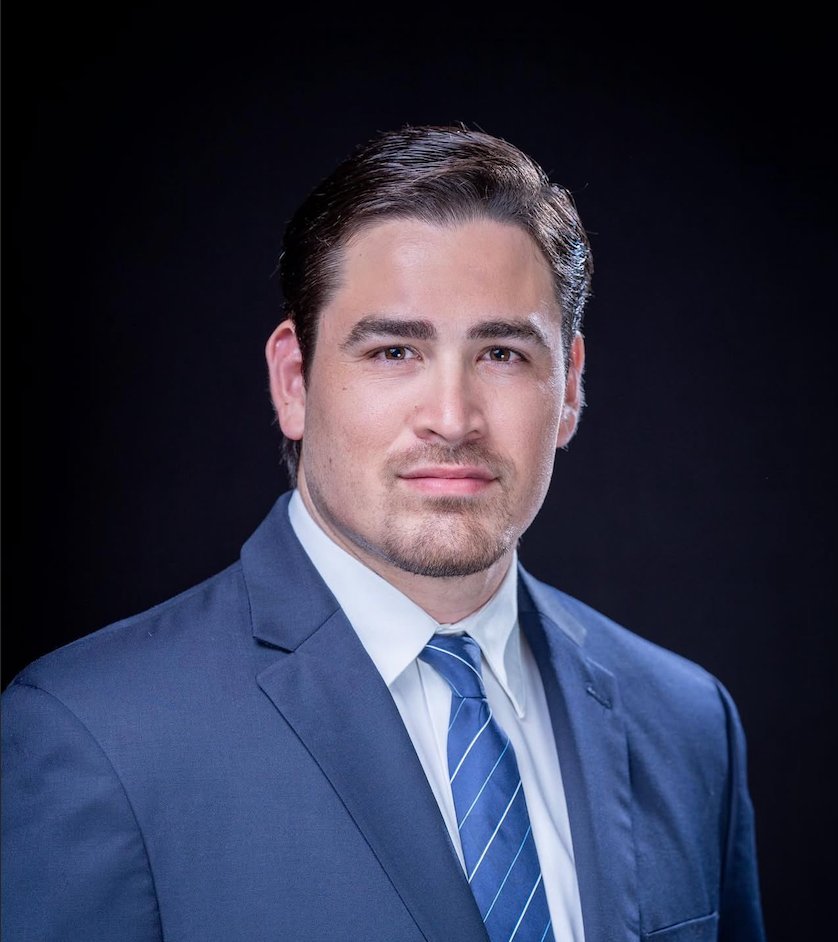
Tyler Warner
Tyler matched into neurosurgery from a Caribbean medical school and founded Ranked to Match to help other IMGs and DOs match into competitive residencies. Every post is written from direct experience.