Program directors read thousands of personal statements a year. The ones they remember — and the ones that actually move an application from “maybe interview” to “yes interview” — share a small number of characteristics. The ones they forget share a very specific set of mistakes.
Here is the framework I used to write my own personal statement (neurosurgery, matched from a Caribbean school) and that we teach every applicant we work with.
The three jobs of a personal statement
Your personal statement has three goals. In order of importance:
- Show the reader who you are as a person — so that by the end of 650 words they feel they know you.
- Make a specific case for your chosen specialty — not “I love helping people” but why this specialty, with reasoning that couldn’t be cut-and-pasted to another field.
- Demonstrate writing ability and self-awareness — bonus but real. Programs want residents who can write, who know their strengths, and who don’t come across as arrogant.
If your draft doesn’t accomplish all three, rewrite.
The structure that works
The best residency personal statements follow a pattern I’ll call the anchor-to-arc structure:
- Anchor (paragraph 1, 100–150 words): A single specific moment that hooks the reader. A patient. A case. A realization. Not abstract philosophy, not a quote, not “I’ve always wanted to be a doctor.” A specific scene you can see in your head.
- Context (paragraph 2, 100–150 words): Who you were before that moment. The forces that led you there. Just enough background to make the anchor land.
- Arc (paragraph 3, 150–200 words): How that moment changed what you pursued — the specific rotations, research, mentors, or decisions that followed. This is where you reference your CV without listing it.
- Why this specialty (paragraph 4, 100–150 words): The specific reasons you’ve chosen this specialty. Clinical, intellectual, and personal. Reasons that would not fit another specialty.
- Future and fit (paragraph 5, 75–125 words): Where you see yourself going, what you’d contribute to a residency program, and a closing that circles back to the anchor.
Total: 650–750 words. Longer is not better. The best statements are short and dense, not long and thin.
Openings that work — and openings that don’t
Openings that don’t
- “Ever since I was a child, I have wanted to be a doctor.”
- “Medicine is the most noble profession.”
- A dictionary definition of a medical term.
- A generic famous quote about helping others.
- “My grandmother got sick and that’s when I knew…”
- Cryptic, confusing openings that make the reader work to understand what’s happening.
These openings are read as “template.” They tell the reader the rest of the statement is probably template too, and the reader starts to skim.
Openings that work
- A specific patient moment told in the present tense with sensory detail.
- A specific technical moment from a rotation where something crystallized for you.
- A decision moment — the day you chose this specialty, the conversation that reframed it.
- A counterintuitive statement followed by the evidence for it.
A good test: would this opening make sense if I cut the next four paragraphs? If not, it’s probably trying too hard. If yes, the rest of the statement has room to be specific.
The specific-to-abstract rule
Every time you say something abstract (“I’m a hard worker,” “I love teaching,” “I’m drawn to this specialty’s intellectual rigor”), follow it with a concrete, specific example. One sentence of evidence.
Before:
I am drawn to the intellectual rigor of internal medicine.
After:
I am drawn to the intellectual rigor of internal medicine — the mornings during my sub-I when a single chest x-ray would send us through tuberculosis, sarcoid, and eventually Goodpasture’s before the diagnosis came back on day four.
The second version is twice as long and ten times more memorable.
Why-this-specialty — the hardest paragraph
This is where most statements collapse. “I love the patient population.” “I love the procedures.” “I love continuity of care.” These phrases are recycled across every application ever submitted.
Write the version that could not be pasted into another specialty. Test each sentence by asking: would this still be true if I were applying to [a different specialty]? If yes, rewrite until it’s specialty-specific.
Example for neurosurgery:
I found the specialty in an OR during a six-hour brainstem cavernoma resection, watching a posterior fossa approach unfold through a two-centimeter corridor. I learned later that every millimeter of dissection that day had been rehearsed in a cadaver lab and planned on a 3D print — and I understood that this was a specialty where preparation translates, tangibly, into the preservation of the person on the table.
Not copy-able to another specialty. That’s the goal.
How to reference your CV without listing it
Program directors have your CV open next to your personal statement. Do not reread the CV back to them. Instead, pick two or three CV items and use them as evidence for a trait or argument you’re making.
Don’t:
I published three papers, presented at two national conferences, and completed two away rotations.
Do:
The 14 months I spent on a chart review of outcomes after flow diversion for blister aneurysms taught me as much about clinical reasoning as any rotation — every chart required me to reconstruct a clinical decision from the notes left behind, and the paper that came out of it is the work I’m proudest of.
The second version references one CV item but does real work — shows thoroughness, clinical reasoning, self-awareness.
What to avoid
- Apologizing. “Despite not attending a U.S. medical school…” — never. Own your background. The committee will see your school on your CV; you do not need to raise it in your personal statement. If there’s a specific story worth telling about your path, tell it as a story, not an apology.
- Humblebragging. “I was told I wouldn’t match, so I worked twice as hard as anyone in my class…” — comes across as arrogant and insecure at the same time.
- Listing adjectives. “I am compassionate, hard-working, dedicated, and resilient.” — prove it with scenes, don’t assert it.
- Clichés. “Marathon, not a sprint.” “The human condition.” “Healing art.” “The privilege of being a doctor.” — cut all of these.
- Politics, religion, controversy — unless they are directly and unavoidably part of your story. Most of the time, leave them out.
- Writing about a single patient’s specific case in identifiable detail. Change details. Respect HIPAA even in a personal statement.
The editing process
- Draft one: dump. Write badly. Write every story. Aim for 1,500 words of raw material.
- Draft two: structure. Impose the 5-paragraph skeleton. Cut to 900 words. Pick the one anchor.
- Draft three: sentence-level. Read it aloud. Every sentence that trips you gets rewritten. Cut to 700 words.
- Get two readers. One specialty-expert (a faculty or resident in your field). One non-medical writer (a friend who doesn’t know medicine). Each catches different things.
- Draft four: polish. Word-level. Read backwards, sentence by sentence, to catch typos your eye has memorized.
- Put it down for 7 days. Come back. What feels stale, cut.
- Final read. If you are still making substantive changes, you are not done. If you are only nudging word choice, you’re close.
A final note on honesty
The best personal statements are recognizably you. If a reader met you at an interview and the statement didn’t match the person — voice, tone, interests — you lose credibility. Write the statement a friend who knows you would recognize.
If your statement reads like every other applicant’s, you will be interviewed like every other applicant — which is to say, possibly not at all.
Write something specific. Write something personal. Write something you’re willing to defend in a room of seven interviewers. That’s what gets you interviewed, and that’s what gets you ranked.
Ready to stop guessing and start matching?
Book a free 30-minute strategy call with Tyler and the Ranked to Match team — no pitch, no obligation.
Book a Free Consultation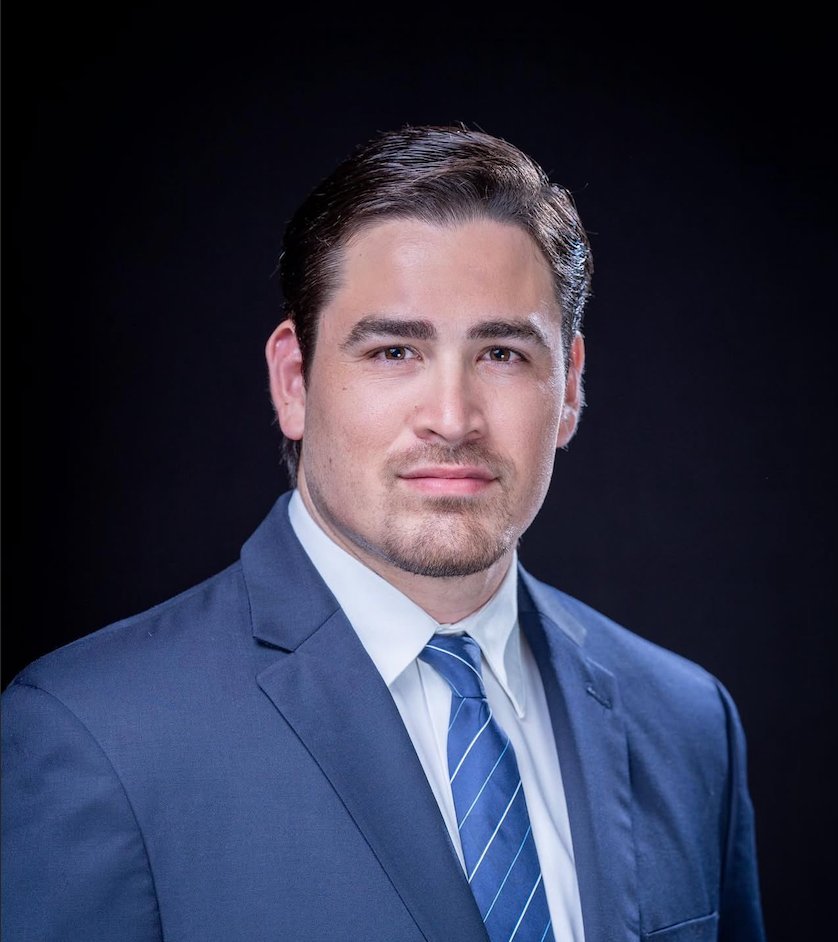
Tyler Warner
Tyler matched into neurosurgery from a Caribbean medical school and founded Ranked to Match to help other IMGs and DOs match into competitive residencies. Every post is written from direct experience.